One heats the air. One heats you. That difference explains everything else.
A straight comparison from the people who run the sauna and cold plunge floor in Redondo Beach.
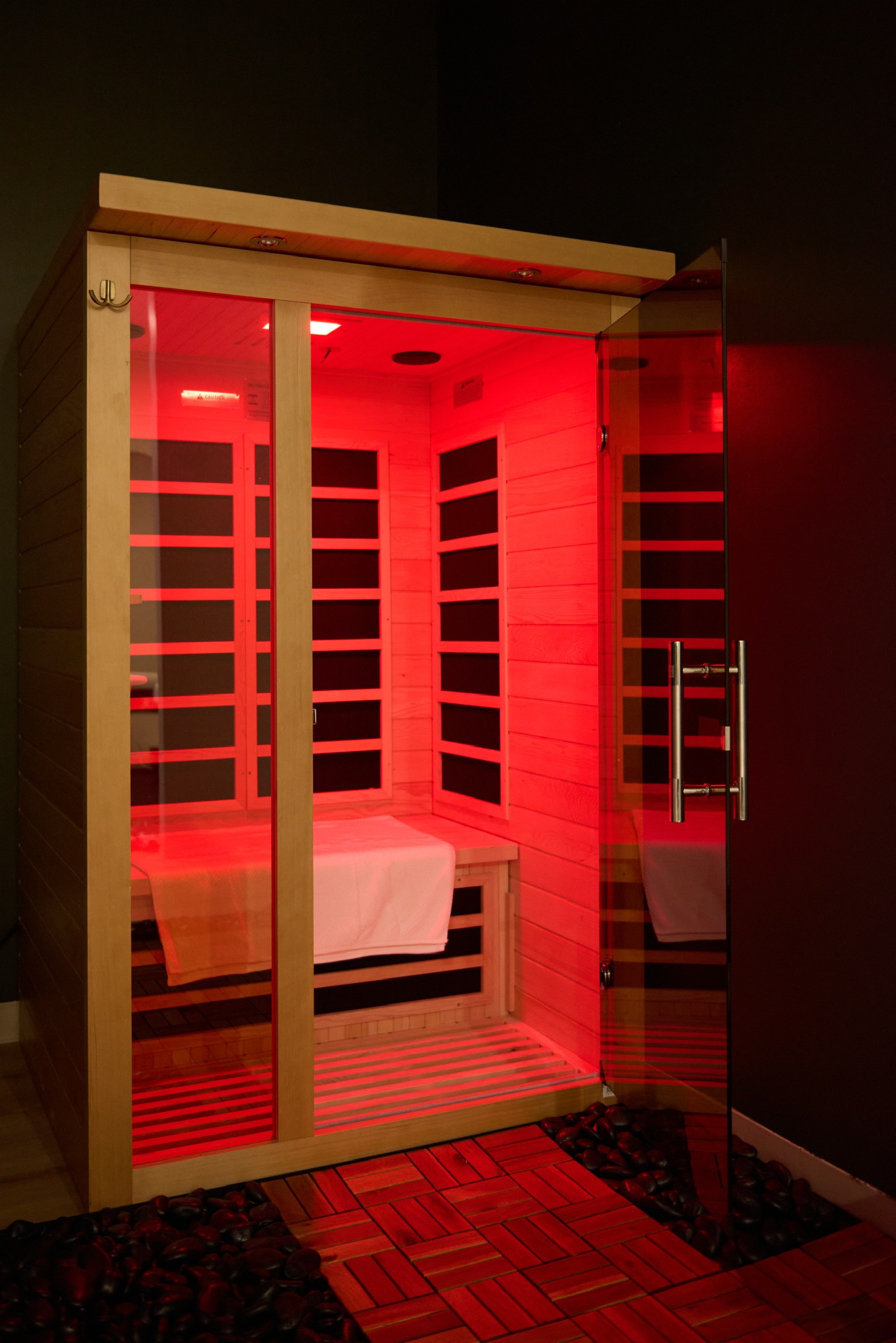
If you've spent any time looking into recovery lately, you've run into the same argument over and over: infrared sauna or traditional sauna? People talk about it like one of them is a scam and the other is magic. It's not that simple.
The short version: they're both good. They just heat your body in completely different ways, they feel completely different to sit in, and they suit different people. The better one is whichever you'll actually use a few times a week.
Here's the honest breakdown, minus the marketing.
The One Difference That Explains Everything
Forget the buzzwords for a second. The entire infrared-vs-traditional debate comes down to how the heat reaches your body.
A traditional sauna heats the air. You walk into a hot room, usually 160-195°F, and the hot air heats your skin, which heats you. It's the same idea as a hot oven. The room is genuinely, aggressively hot.
An infrared sauna doesn't really heat the air much at all. It uses infrared panels that emit radiant heat, the same kind of warmth you feel from the sun on your face on a cool morning, and it heats you directly without cooking the room. That's why an infrared sauna feels milder at 120-150°F but still gets you sweating hard.
That single difference, heating the air versus heating you, is the reason for every other difference on this list. Once you get that, the rest is easy.
Traditional Sauna: the Classic for a Reason
The traditional sauna (sometimes called a Finnish or dry sauna) is the one humans have been using for thousands of years. There's a reason it stuck around.
What it feels like
Intense. The heat hits you the second you open the door. Your breath gets hot. By a few minutes in you're sweating everywhere. It's an immersive, almost meditative kind of hard. A lot of people love that it forces them to slow down and just sit in the discomfort.
The case for it
Higher heat means a bigger cardiovascular nudge. The most cited sauna research comes out of Finland, on traditional saunas, and it tends to look at frequent use (4-7x per week) and markers of heart and longevity health. That body of work is observational, not proof of cause, but it's real.
That deep wrung-out feeling. The high air temperature is hard to replicate. If you want the most intense heat experience, this is it.
Great before a cold plunge. The bigger the heat, the more dramatic the contrast when you hit the cold. More on that below.
The trade-offs
It can feel like too much, fast, especially if you're new, dehydrated, or not a fan of breathing hot air.
Takes longer to heat up if you have one at home.
Infrared Sauna: the Gentler Heat That Still Works
Infrared is the newer kid, and because it's newer it gets oversold by people trying to make it sound futuristic. Ignore the hype and it's still genuinely good, just for slightly different reasons.
What it feels like
Way more tolerable. The air stays breathable, so you can sit longer and actually relax instead of white-knuckling it. You still sweat a ton, sometimes more than people expect. It just builds gradually instead of slapping you in the face.
The case for it
Easier to tolerate, so easier to be consistent. This is the underrated one. The best sauna is the one you'll do three times a week, and a lot of people simply last longer in infrared.
Great for beginners and the heat-sensitive. If a traditional sauna makes you bail at four minutes, infrared lets you build the habit without dreading it.
Comfortable enough to stack. It's easy to do a longer, calmer session. Good for a recovery-focused wind-down rather than a heat-shock blast.
The trade-offs
The research base is thinner than traditional sauna's. Promising, but smaller studies. Anyone telling you infrared is clinically proven to do X is getting ahead of the science.
It's a different sensation. If you specifically want that punishing, breath-stealing heat, infrared won't scratch that itch.
Head to Head
How it heats you: traditional warms the air around you, infrared warms your body directly.
Typical temperature: 160-195°F traditional, 120-150°F infrared.
How it feels: intense and immersive versus milder and breathable.
Best for: heat lovers and max intensity versus beginners and longer, calmer sessions.
Research base: larger for traditional (the Finnish cohort studies), smaller and newer for infrared.
Consistency: infrared is easier to stick with, and consistency is what pays.
What the Research Actually Says (and Doesn't)
Let's be straight, because the internet isn't: regular sauna use is associated with some genuinely good things. Better cardiovascular markers, lower stress, and that post-sauna reset people chase. The strongest evidence is observational and mostly on traditional Finnish saunas with frequent use. Associated with is not the same as guaranteed to cause, and we're not going to pretend otherwise.
What's solid enough to say plainly:
Both styles get you sweating and trigger a heat-stress response, which is the thing your body adapts to.
Consistency matters more than which model you pick. Two sessions a week, every week, beats an intense session you do twice a month.
Sauna is recovery and stress management, not a weight-loss tool. The scale drop after a session is water you'll drink right back. Anyone selling sauna as fat loss is selling you dehydration.
One safety note: heat isn't for everyone. If you're pregnant, have low blood pressure, a heart condition, or you're on medication that affects how you handle heat, talk to your doctor before starting a sauna routine. Hydrate before and after, and step out if you feel dizzy.
So Which Should You Pick?
Here's the decision tree we actually give people:
New to heat, or you've bailed on saunas before? Start infrared. It lets you build the habit without hating it.
Heat-sensitive, or you want a calm recovery wind-down? Infrared.
You love intense heat and want the most-studied option? Traditional.
Planning to pair it with a cold plunge? Either works, but the bigger the heat going in, the bigger the contrast.
Can't decide? Try both a few times. Your body will tell you which one you'll actually keep doing. That's the right answer for you.
The Move Most People Miss: Pair It with Cold
Whichever sauna you land on, the biggest recovery payoff comes from contrast therapy: going from hot to cold and back. Heat opens you up, cold snaps you back, and the cycle is what leaves you feeling genuinely reset instead of just sweaty.
That's why the sauna at Club Elementum lives right next to the cold plunge. Sauna, plunge, repeat. If you've never done the full hot-cold cycle, that's the thing to try.
Sauna in Redondo Beach: the South Bay Take
If you train down here, the Strand, Torrance Beach, an early F45 or Barry's class, a long run on the Marvin Braude path, sauna is one of the most underused recovery tools in your week. You're already putting in the hard part. Twenty minutes of heat (and a cold plunge after) is how you actually absorb the work instead of just accumulating it.
At Club Elementum in Redondo Beach we run an infrared sauna right alongside the cold plunge, so you can do the full contrast cycle in one visit. We're upfront about it: ours is infrared, and we pair it with the cold so the contrast does the heavy lifting.
Want to try it for yourself? Book a sauna and cold plunge session at Club Elementum in Redondo Beach and feel the contrast cycle firsthand.
Frequently Asked Questions
Is an infrared sauna better than a traditional sauna?
Neither is universally better. A traditional sauna heats the air to 160-195°F for an intense experience and has the larger research base. An infrared sauna heats your body directly at a milder 120-150°F, making it easier to tolerate and easier to do consistently. The best choice is the one you'll actually use regularly.
Do you sweat more in an infrared or traditional sauna?
Both make you sweat heavily. A traditional sauna usually makes you sweat faster because the air is much hotter. An infrared sauna builds the sweat more gradually but can produce just as much over a full session, since the comfortable heat lets most people stay in longer.
Which sauna is best for beginners?
Infrared is usually the better starting point for beginners and anyone sensitive to heat. The air stays breathable, so it's far easier to sit through and build a consistent habit before progressing to a hotter traditional sauna if you want.
Should I do the sauna before or after a cold plunge?
Most people do heat first, then cold: sauna to warm up and open up, then a cold plunge to finish. Many repeat the hot-cold cycle two or three times. This contrast therapy is where a lot of the reset feeling comes from.
How often should I use a sauna?
Consistency matters more than intensity. Two to four sessions a week, every week, does more than an occasional marathon session. Always hydrate before and after, and check with your doctor first if you're pregnant or have a heart condition or low blood pressure.